How can 200 Strangers Create Collective Identity?
Ark: In Search of Surrender is a participatory, site-specific architectural ritual that tests how somatic awareness, unscripted performance, and spatial design can forge vulnerability and collective identity among 200 strangers in Toronto.
In an ever-expanding digital culture starved for genuine closeness and embodied experience, Ark: In Search of Surrender conjures secular sanctuaries that demand presence, choice, and transformation. As our awareness of interdependence with one another and with nature increases, the need for modes of communication and self-expression which preserve the truth of personal and communal identity becomes ever more urgent. Informed by Dagara ritual technologies as illuminated in Malidoma Patrice Somé's The Healing Wisdom of Africa, Ark translates ritual knowledge into contemporary form using water, wood, flora, light, and sound as elemental cues for shared action. The work becomes a living vessel, an ark that sails only through collective surrender.
Ritual and performance have long operated as social technologies, ways communities teach values, mark change, and make meaning together. Theatre often extends a community’s mythology while offering outsiders a window into its world. Ritual, by contrast, is an intentional communal act that can move a group into liminality: a threshold where ordinary roles loosen and new forms of shared meaning can emerge. These practices once held life’s passages—birth, initiation, marriage, death—not as symbolic gestures, but as immersive preparations for change. Ark: In Search of Surrender is a creative experiment that tests whether such intelligence, reconstructed and reinterpreted with care, can still within the plural realities of a contemporary Western city like Toronto. Through the study of West African ritual logics and their spatial ingredients, Ark re-composes key elements for the present day: a sequence of shared acts, a choreographed relationship between witness and participant, and a sensorial architecture that can carry intensity without demanding belief.
The Venue
Ark unfolded inside a former Buddhist temple in Toronto—a space chosen for its exposed wooden structure, cathedral-like ceiling, and quiet gravity. Across the city, former sacred sites, community halls, and underused institutions often carry a spatial authority that new construction struggles to replicate. By repurposing the temple’s Great Hall, its inherited atmosphere became a communal instrument: a room capable of holding reflection, repair, and connection without erasing the memory already embedded in its walls. In Ark, the building was not a backdrop—it was an active partner in the search for collective identity.
The Great Hall: Two Realms
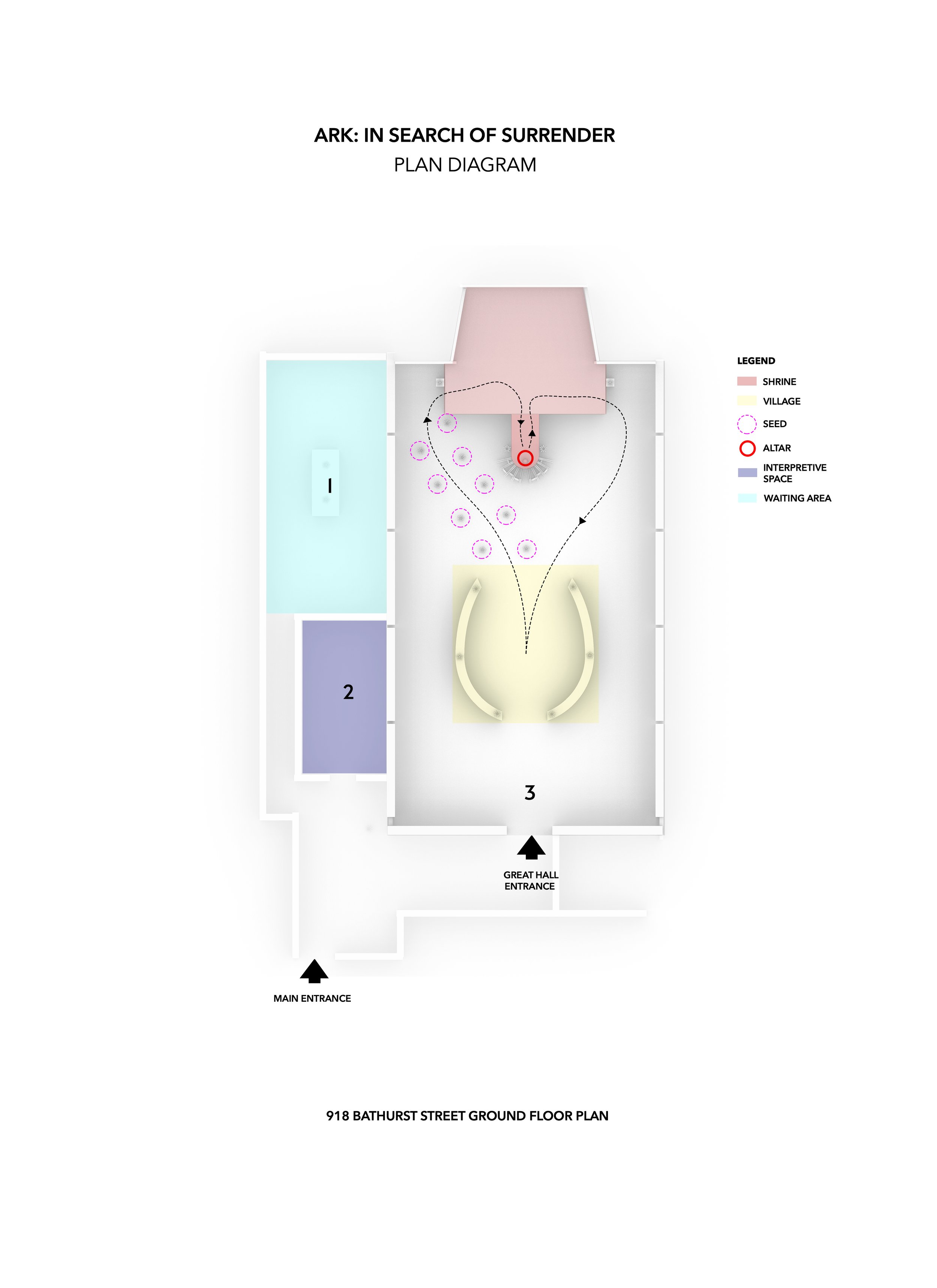
The hall was divided into two connected realms: the Shrine and the Village.
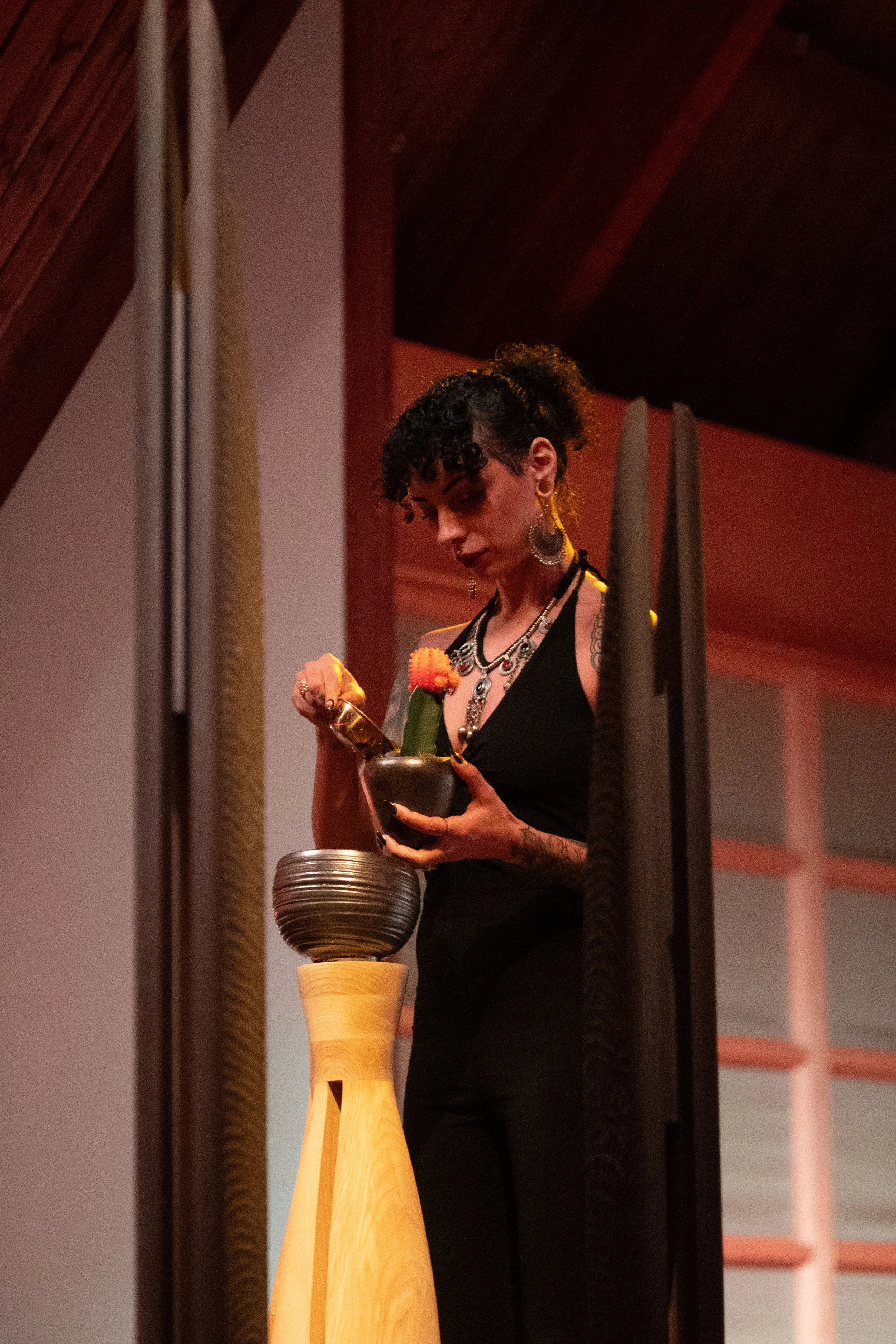
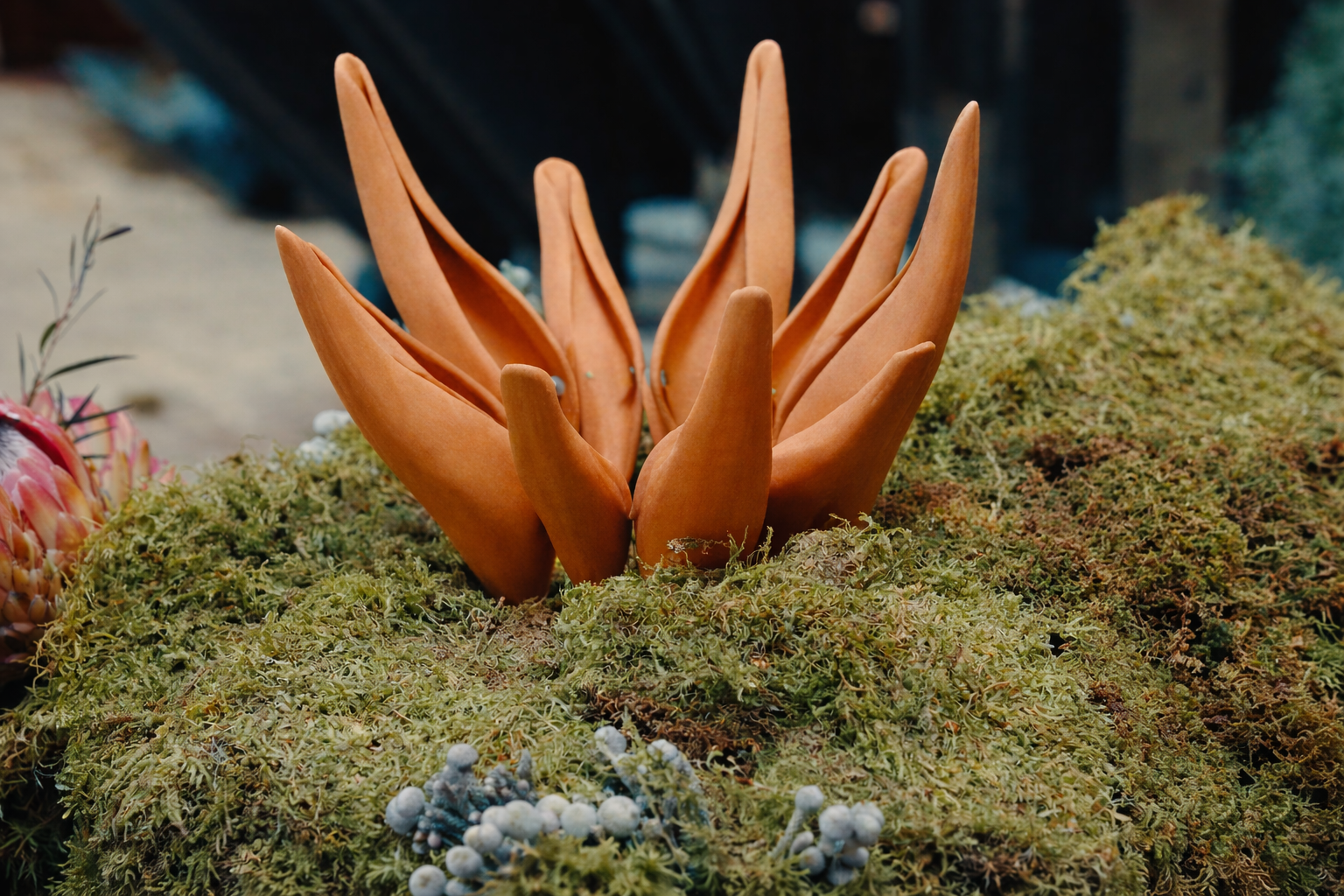
The Shrine rose thirteen feet high and eight feet wide, set on a raised platform aligned with the hall’s stage and joined to it like an extension of the building’s spine. Its wooden body was formed by ten hand-carved, petal-like ribs, converging at the base and opening outward like a lotus in bloom—an emblem of purity and a symbol of parts becoming whole. Emerging from a soft mound of natural flora, the Shrine held a sculptural altar with a bowl of water used to anoint each Seed.
The Village served as the gathering space: an antechamber where guests assembled, settled, and prepared to begin. A clear path linked the Village to the Shrine, lined with sculptural vessels. Each vessel held a Seed—a planter cradling a seedling—carried like a quiet promise.
The Journey
To reach the Shrine, participants climbed the venue’s stage and stepped onto the platform before arriving at the altar. The ascent transformed the building itself into a vessel—both a physical route and a symbolic passage toward collective identity. Guests were invited to bring a small personal artifact imbued with meaning—something simple and intimate, like a keychain or photograph—to offer to the occasion.
The Ritual
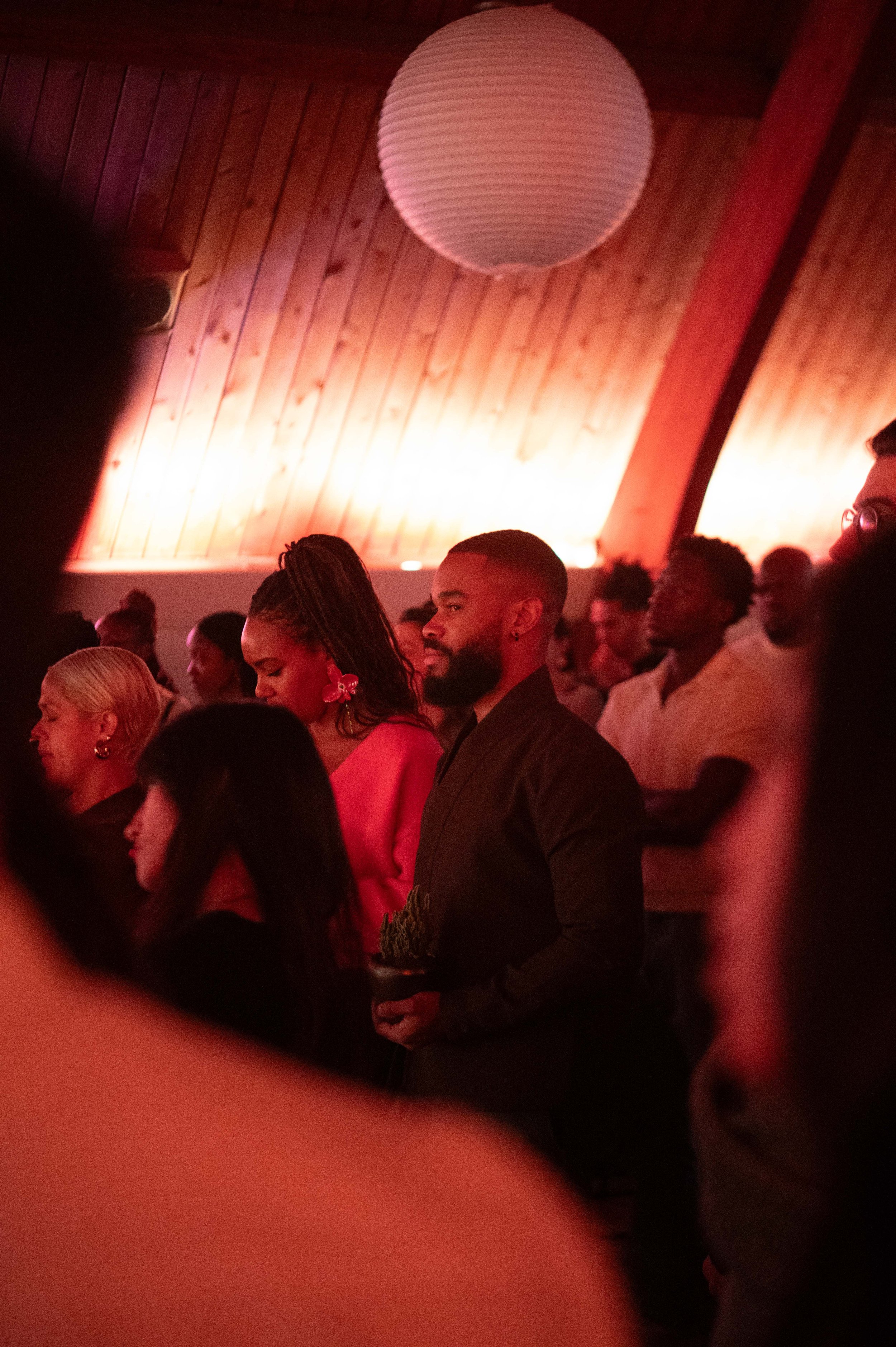
The ritual began when live music drew nine participants into a spontaneous gathering at the centre of the Village, encircled by other guests. From there, a procession formed and moved toward the Shrine as the remaining guests rose to their feet, bearing witness.
At the altar, each participant:
selected a Seed,
spoke a blessing over their offering,
placed their artifact into a vessel in exchange for the Seed,
and anointed the Seed with water drawn from the Shrine—an act echoing cycles of care, nurture, and becoming.
The journey then returned to the Village, where blessings, voiced and heartfelt, met each Seed alongside the performer’s steady melody. This sequence repeated until everyone had completed the exchange, culminating in a final musical offering that sealed the space as both artwork and rite.
Reflections & Release
Immediately after, the room transitioned into open conversation. Guests shared what they felt—quiet reflection, visible emotion, and, for some, tears. For a moment, the communal acts produced a palpable solidarity: a sense of belonging to something larger than oneself. For those who joined the procession, the gaze of the assembled community felt like a supportive force, gently propelling them forward.
Yet others expressed unease with the intensity of the atmosphere—its closeness to religion. That tension became part of the experiment’s truth. What Ark revealed was not consensus, but a threshold: a participatory experience that could inspire belonging and also resistance, illuminating both the potency and the risk of ritual in a plural public.


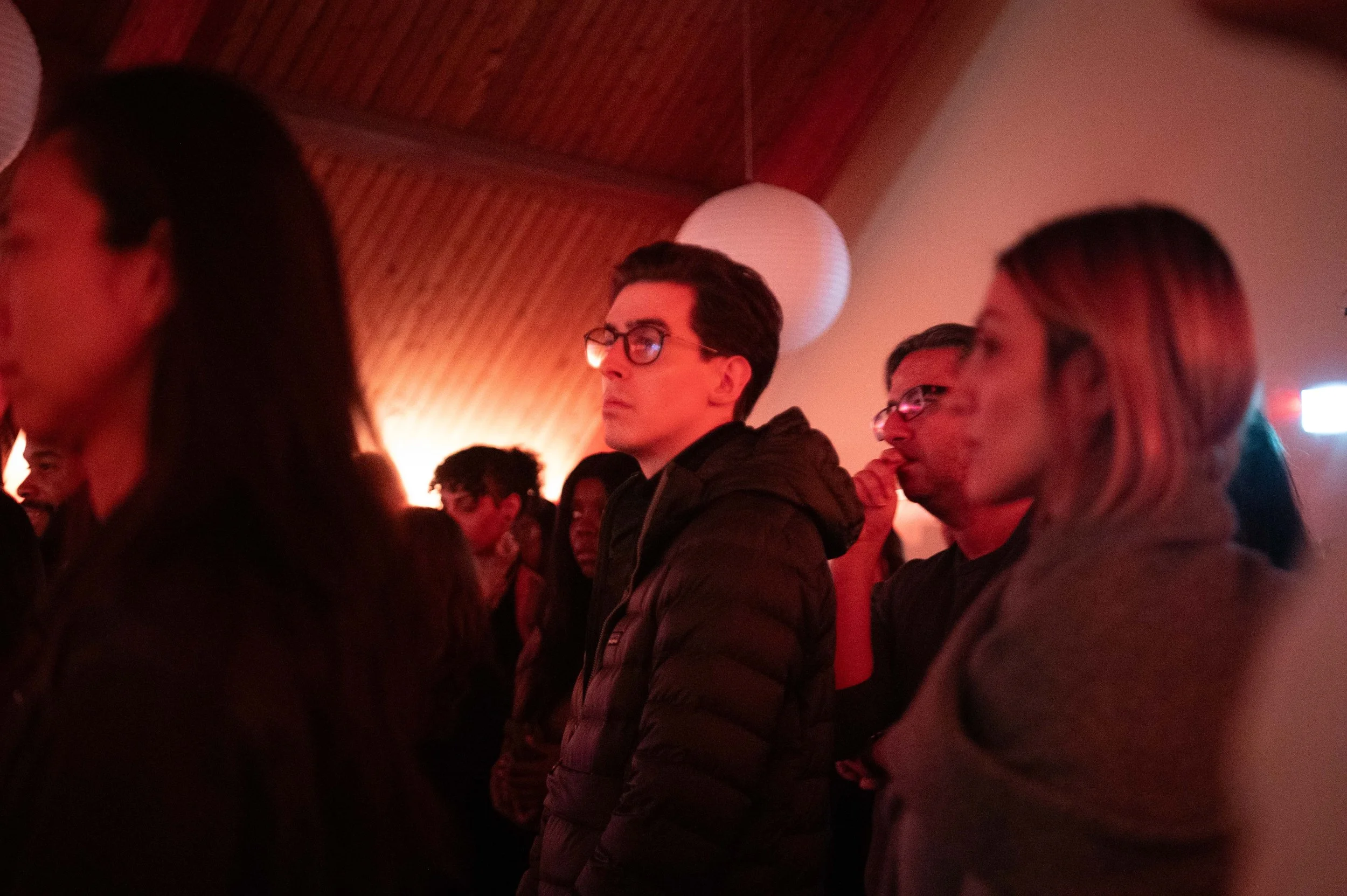
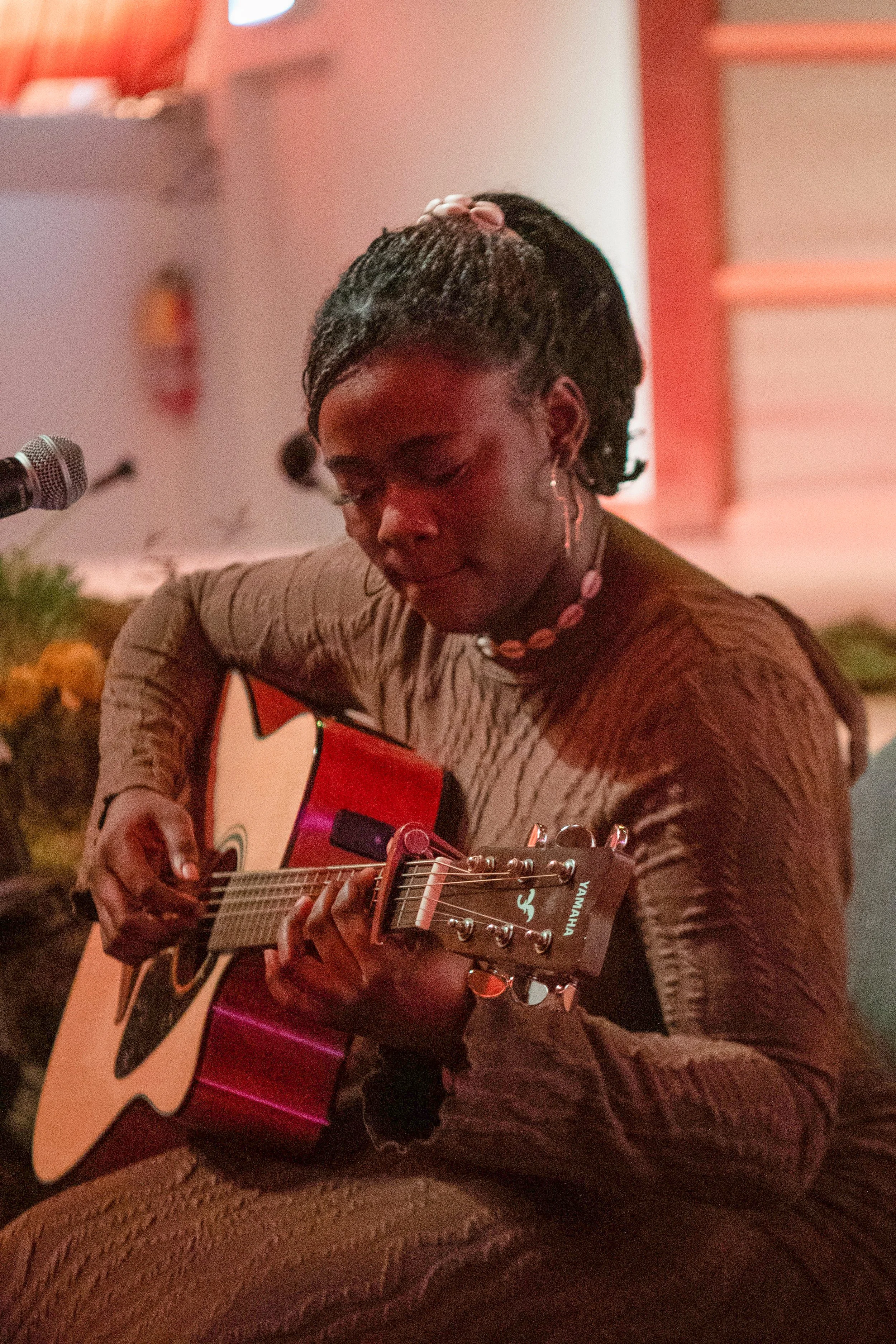
As part of the programming of the project, Hariri Pontarini Architects hosted Odudu and the key collaborators of the project where they shared an intimate discussion about our creative journey behind this immersive experience, blending music, art, and architecture to explore the potential for community healing and connection.

CREDITS
Odudu Umoessien - Lead Designer & Creative Director
Dylan Moore - Fabricator/Sculptor
Verundah (Anoop Kaura, Harman Naaree) - Florists
Sewa - Musical Performer
Queenie Xu - Ceramicist
Rachel Hale - Facilitator
Firi Fombo - Producer
Fifo Adebakin - Photographer
Ali Elmoudia, Ediri Obor - Video Documentation